1st International
Summit on
Clinical Metabolomics
Urinary metabolomics and the microbiota in precision medicine:
from research to clinical practice
From Friday 19 to Tuesday 23 February 2027
Five days of advanced training, from 19 to 23 February 2027. The core of the programme consists of three afternoon plenary sessions – Friday 19, Monday 22 and Tuesday 23 February, from 16:00 to 20:00 – each with four 60-minute lectures: 40 minutes of scientific presentation and 20 minutes of interactive discussion led by the chairs. The programme follows the life course: from the foundations and the early origins of health, through precision paediatrics, to adult medicine.
Saturday 20 and Sunday 21 February are entirely devoted to four optional teaching courses in small groups, held in the morning and afternoon: reading the metabolomic profile, the first 1,000 days and neurodevelopment, translating the profile into nutritional and follow-up plans, and infections, antibiotics and immunity. The programme is completed by one-to-one meetings with the faculty, by appointment, on the mornings of the three plenary days.
Metabolomics studies the full set of small molecules produced by the body and its microbiota, providing a functional and dynamic snapshot of health status. Analysis of the urinary metabolome is non-invasive and repeatable; it complements genetic data and conventional laboratory parameters and enables early detection of metabolic, inflammatory and nutritional imbalances.
The Summit follows a path across the life course: from the foundations of the discipline and the evidence on the early origins of health (the perinatal period and the first months of life), through precision paediatrics (cow’s milk protein allergy, neurodevelopment, obesity and diabetes), to adult medicine (immunity and the oral microbiota, obesity, type 2 diabetes and neurodegeneration). The common thread is the microbiota–metabolome–host axis and its translation into evidence-based tools for early diagnosis, monitoring and personalised intervention.
The plenary sessions are complemented by active learning: in the weekend teaching courses, participants work in small groups on real clinical cases, from reading the report to building a personalised plan, and explore the first 1,000 days of life and the relationship between infections, antibiotics, immunity and the microbiota; in the one-to-one meetings, they can discuss issues from their own professional practice directly with the experts.
The scientific programme is organised into three afternoon plenary sessions (19, 22 and 23 February), each featuring four expert lectures and interactive discussions. The sessions explore the foundations and clinical applications of urinary metabolomics, the microbiota–metabolome axis in early life, precision paediatrics, and the role of metabolomics in adult medicine, chronic inflammation and brain ageing.
Four optional practical teaching courses, scheduled on 20 and 21 February, provide an opportunity for more focused, hands-on learning in small groups. Through clinical cases and guided exercises, participants will work on interpreting urinary metabolomic profiles, understanding the first 1,000 days and neurodevelopment, developing personalised nutritional strategies, and exploring the impact of infections, antibiotics and immunity on the microbiota.
On the mornings of the three plenary days, participants can also book individual 30-minute one-to-one meetings with faculty experts to discuss clinical cases, review metabolomic profiles and explore how to integrate these tools into everyday clinical practice. The programme combines scientific evidence, clinical experience, interactive discussion and practical application across different stages of life.
Scientific Directors, Scientific Committee, chairs, speakers and tutors of the Summit (in alphabetical order).
| Prof. Massimo Agosti
Scientific Committee · Chair · One-to-one |
Full Professor of Paediatrics, University of Insubria; Director of Neonatology and Neonatal Intensive Care, Acting Director of Paediatrics Varese-Cittiglio and Director of the Mother and Child Department, “F. Del Ponte” Hospital, ASST Sette Laghi, Varese; President of the Italian Society of Neonatology (SIN) |
| Dr Suren Budhan
Scientific Committee · Chair · Speaker · One-to-one |
General practitioner and emergency physician; researcher in clinical nutrition, obesity and diabetes (PreciDIAB research group) — Mauritius |
| Prof. Carlo Capristo
Speaker · One-to-one |
Paediatrician, Head of the Neonatology Unit, University of Campania “Luigi Vanvitelli”, Naples |
| Prof. Marco Carotenuto
Scientific Committee · Speaker · One-to-one |
Director of Child and Adolescent Neuropsychiatry, University of Campania “Luigi Vanvitelli”, Naples |
| Prof. Vassilios Fanos
Scientific Director · Chair · Speaker · Teaching course tutor · One-to-one |
Full Professor of Paediatrics, University of Cagliari; Director of the Neonatal Intensive Care Unit, Cagliari University Hospital; Director of the Paediatrics Residency Programme, University of Cagliari; President of the Italian DOHaD Society (Developmental Origins of Health and Disease); Past President of UMEMPS (Union of Middle-Eastern and Mediterranean Pediatric Societies); Member of the Executive Board of UENPS (Union of European Neonatal and Perinatal Societies); Permanent Member of the International Perinatal Collegium and Associate Member of the International Academy of Perinatal Medicine; Editor-in-Chief of the Journal of Pediatric and Neonatal Individualized Medicine (JPNIM) |
| Prof. Gjeorgjina Kuli-Lito
Scientific Director · Chair |
Head of the Paediatric Infectious Diseases Service, Department of Paediatrics, “Mother Teresa” University Hospital Centre, Tirana; President of the Albanian Society of Paediatrics |
| Dr Carla Marzetti
Speaker · Teaching course tutor · One-to-one |
Biologist; Scientific Director of the Permanent School of Advanced Training in Metabolomics and scientific director of a clinical laboratory — Bologna |
| Dr Pamela Paoletti
Speaker · One-to-one |
Nutritionist (biologist) — Mauritius |
| Prof. Cristiano Rumio
Speaker · One-to-one |
Associate Professor of Human Anatomy, Department of Pharmacological and Biomolecular Sciences “Rodolfo Paoletti”, University of Milan |
| Prof. Gianfranco Trapani
Speaker |
Paediatrician, researcher in paediatric and clinical metabolomics |
| Prof. Salvatore Vendemmia
Speaker · One-to-one |
Scientific Committee · Chair Emeritus Head of Paediatrics and Neonatology, Aversa Hospital; founder and Past President of the Italian Society of Hospital Paediatrics (SIPO); Italian President of the Italian Arabian Pediatric Society (IAPS) and of the Italian-Romanian Pediatric Society (IRPS) |
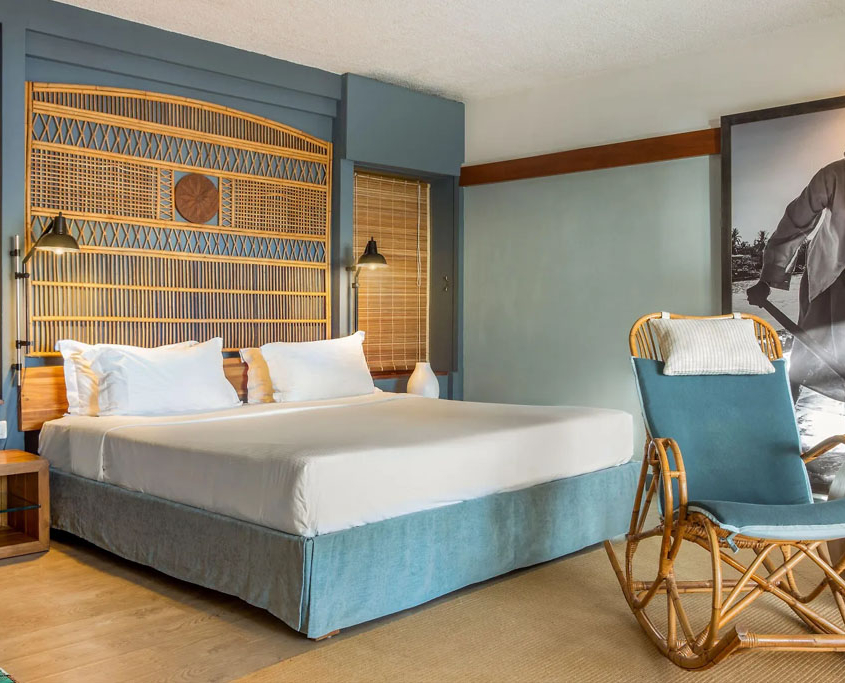
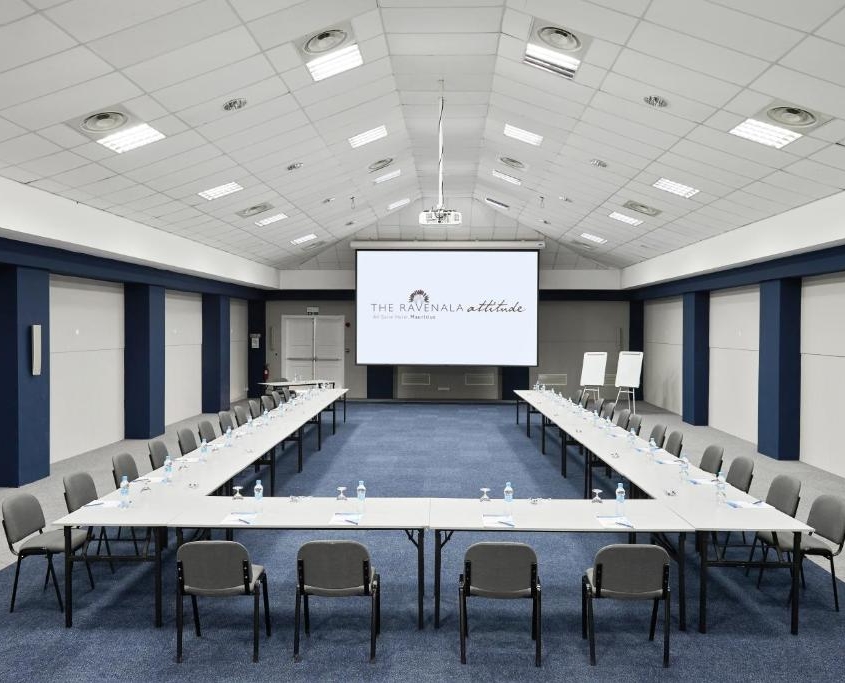
The Ravenala Attitude Hotel is the ideal setting for a high-level scientific summit.
Its conference facilities feature modular meeting rooms equipped with state-of-the-art audiovisual technology.
A single coordinated travel arrangement for the entire group, from departure at Fiumicino Airport to the return journey: no participant needs to make individual arrangements, and the sponsor has just one list to manage.
OUTBOUND JOURNEY — WEDNESDAY, 17 FEBRUARY
Rome Fiumicino 21:45 → Mauritius 11:10 on 18 February. Direct flight.
Overnight flight: 18 February remains fully available. Connecting travel to Rome included from anywhere in Italy.
ARRIVAL — THURSDAY, 18 FEBRUARY
Sir Seewoosagur Ramgoolam Airport → The Ravenala Attitude by private bus reserved for the group. Approximately 1 hour.
RETURN JOURNEY — THURSDAY, 25 FEBRUARY
Mauritius 23:10 → Rome Fiumicino 07:30 on 26 February. Direct flight.
Resort-to-airport transfer by bus, approximately 1 hour, departing in the evening.
Seven nights at The Ravenala: check-in on Thursday, 18 February; late check-out on Thursday, 25 February.
Valid individual passport, expiring no earlier than 22 August 2027 (Mauritian regulations require a minimum validity of six months beyond the date of departure from the country).
Mauritius All-in-One Travel Digital Form: the official entry form required by the Mauritian Passport and Immigration Office (PIO). It must be completed online via the government portal safemauritius.govmu.org. Every traveller, including minors, must submit the form within the 30 days prior to arrival and no later than 24 hours before departure. Once completed, a QR code is generated and must be presented at immigration checks. The form is free of charge.
No visa is required for citizens of the European Union.
The programme will be submitted for CME accreditation to the European Accreditation Council for Continuing Medical Education (EACCME®) by the provider Med-Ex Learning srl.

The certificate of attendance will be sent by email within 10 days after the end of the Congress. Participants are also advised to check their Junk/Spam folder.

Kassiopea srl
Via San Tommaso D’Aquino, 20 – 09134 Cagliari
Tel. +39 070 651242
luisaserra@kassiopeanews.com
www.kassiopeagroup.com